Key takeaways
- On a steep site, the structure below grade often costs more attention than the house you see.
- Access, staging and sequencing need a plan before excavation starts.
- Geotechnical and structural engineers are part of the core team from day one.
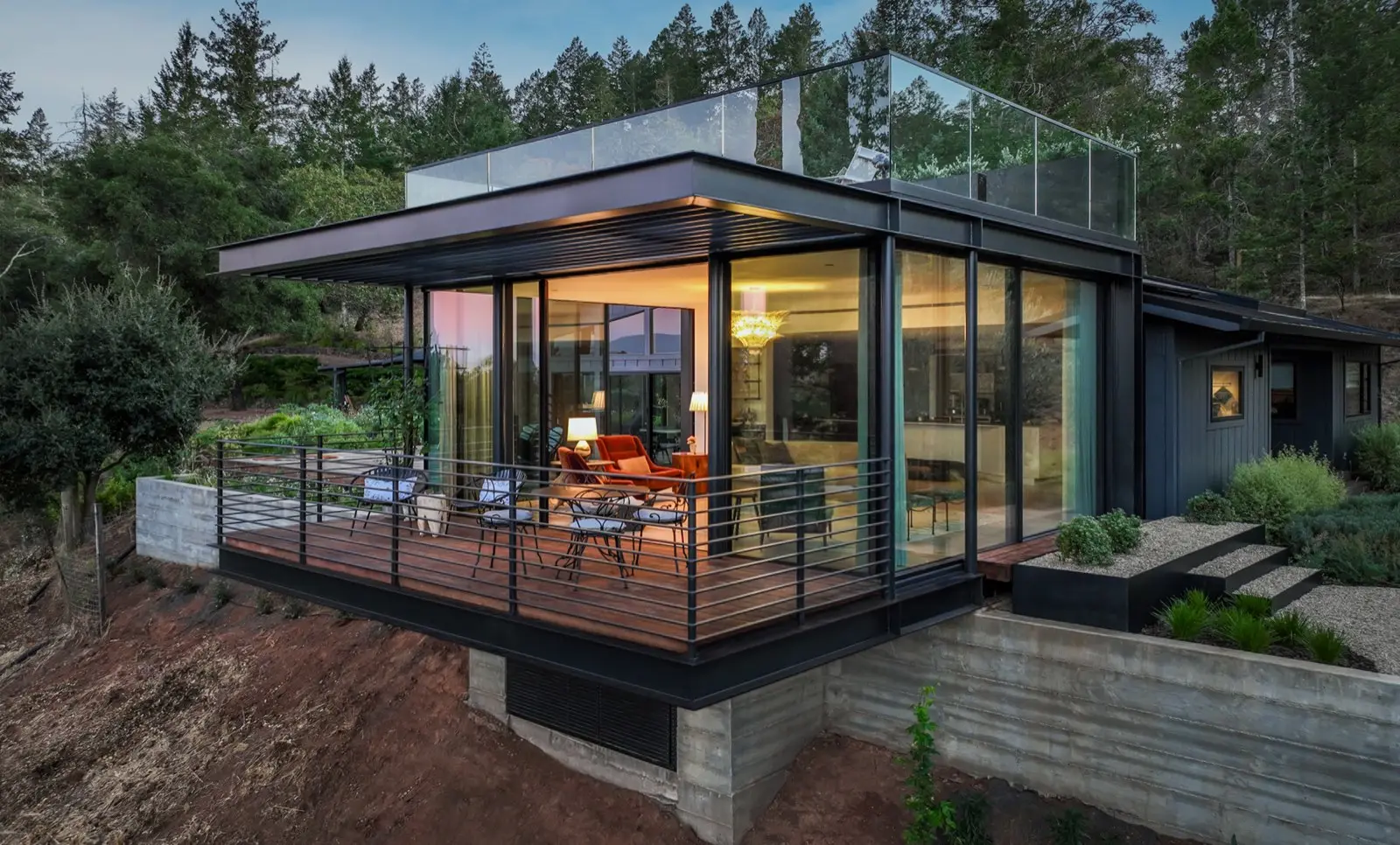
Some of the Bay Area's best views come with some of its hardest sites. MurphyMcKenna has built an infinity edge pool and cabana on a 40 degree slope on Panoramic Highway in Mill Valley, and is building a new 5,940 sq.ft. home with an infinity pool on a 40 degree slope at Vista Grande in Sonoma.
The ground comes first
Hillside work starts with the soil and rock. A geotechnical engineer's findings shape the foundation, retaining walls and drainage, and the structural engineer designs around them. The builder's job is to sequence that work safely and keep it on schedule.
Plan access before you dig
- Where will equipment, concrete and materials be staged?
- How will trucks and pumps reach the work on a narrow road?
- How will the site be kept stable and dry through the rainy season?
- How will neighbors be kept informed and inconvenienced as little as possible?
Document everything
Much of a hillside project ends up underground. Video and drone documentation, which MurphyMcKenna provides through Multivista, gives owners and architects a record of foundations, reinforcement and systems before they are covered.
| Phase | What to watch |
|---|---|
| Excavation | Rock, groundwater and shoring |
| Foundations and walls | Reinforcement, waterproofing and drainage |
| Structure | Steel, cantilevers and connections |
| Pool and outdoor | Edges, finishes and long-term water management |
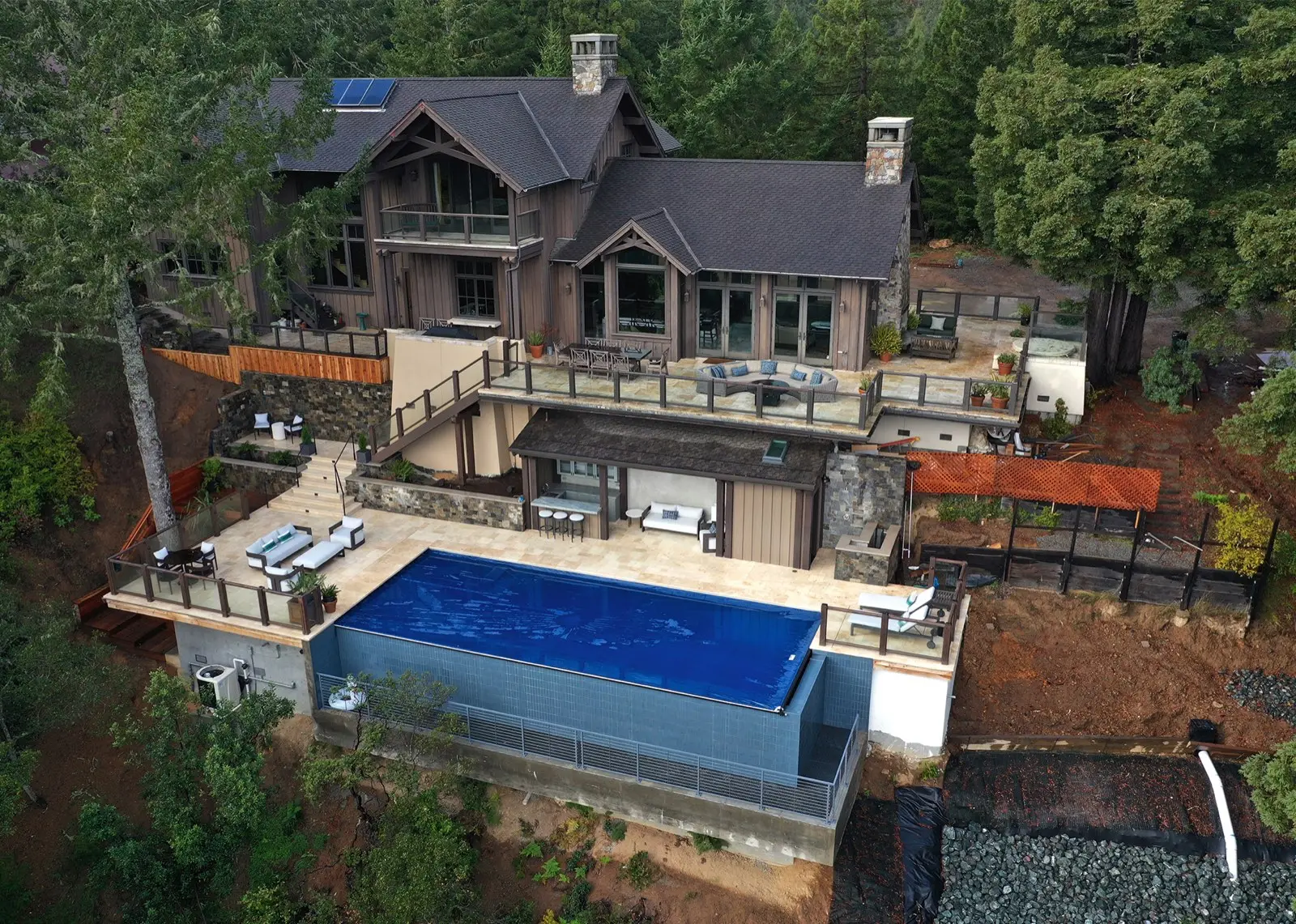 Related projectPanoramic HighwayMill Valley, CA · Pool and cabana on a 40 degree slopeSee the project